
By
Birkan Yildiz
on 30/07/2025, 15:16
Last updated on 9/28/26, 11:12 PM

Jira is a versatile tool for tracking all kinds of processes, whether it’s software development, project management, service management, or any other type of work. Improving these processes is not a one-time task but a cyclical one that requirescontinuous evaluation and refinement.
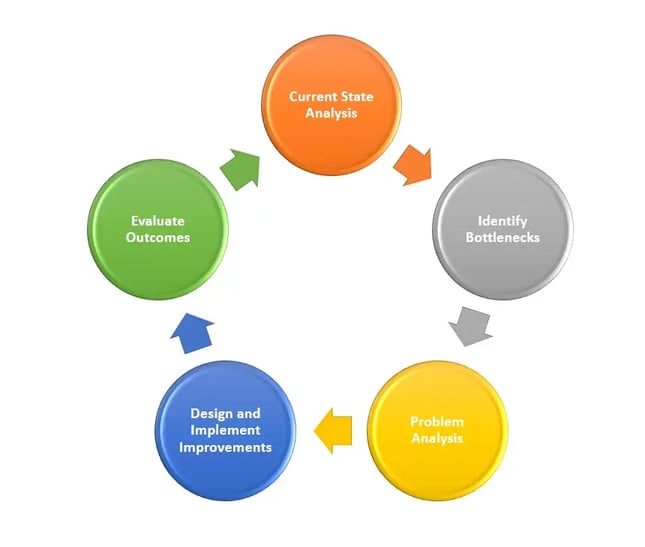
The Process Improvement Cycle in Jira
Current State Analysis
Start by capturing the current situation. You are not trying to give meaning to anything at this point. Just ask: “Where are we now?” and “How did we get here?”
Identify Bottlenecks
Pinpoint problem areas. Determine, “Where are we losing time?” and “Which steps are taking longer than expected?”
Problem Analysis
Investigate why these issues are occurring. Which ones have the most effect? Which ones are the easiest to fix?
Design and Implement Improvements
Plan and execute actions to enhance efficiency. “What needs to be done to improve, and how can we achieve it?”
Evaluate Outcomes
Assess the impact of your improvements. “Did it work? Are things getting better?”
Repeat the Process
The cycle continues, fostering ongoing enhancement.
At two critical points in this cycle—during the initial analysis and the outcome evaluation—you need to observe trends to gauge progress. Seeing these trends is crucial for acting proactively.
How Timepiece - Time in Status Helps
Timepiece - Time in Status for Jira is a powerful Jira reporting app designed to provide comprehensive insights into your workflow. Here’s how it can help:
Detailed Reports: Timepiece generates reports showing the time each issue spends in various statuses, assigned to different team members, or groups.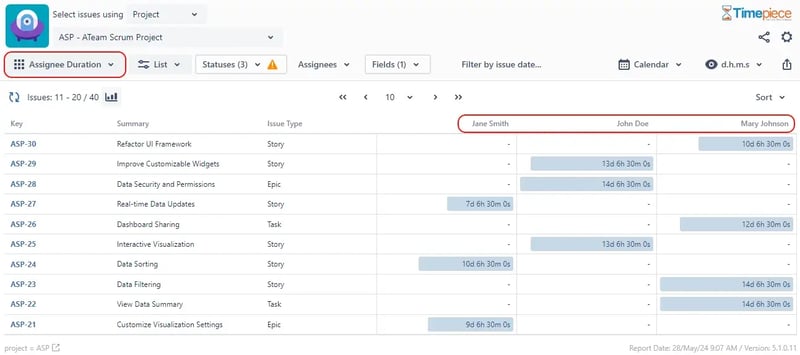
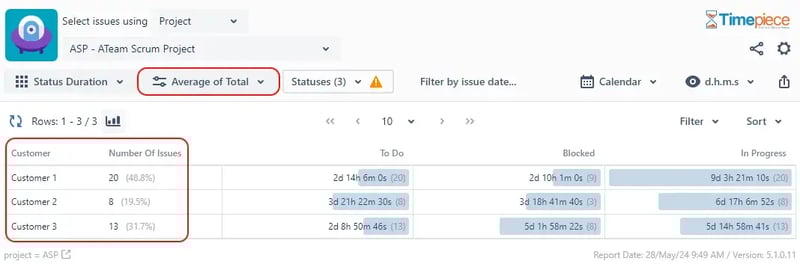
Average Durations: Utilize the app to produce reports displaying average durations, grouped by the issue fields you select. You can see average duration for your issues grouped by project, issue type, component, customer, vendor, service, and more.
Trend Analysis: Group issues by date fields to monitor trends over days, weeks, months, or even years. Visualize these trends with various chart types.
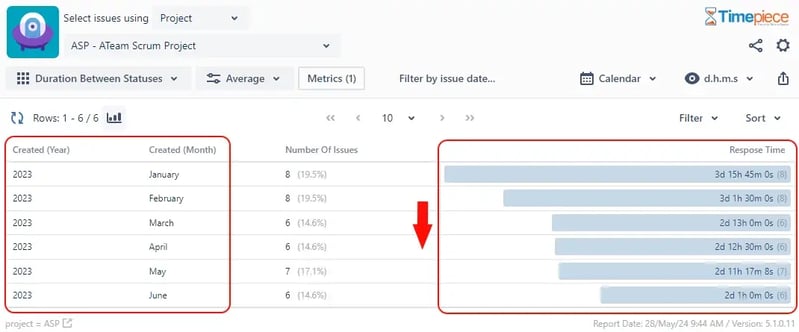
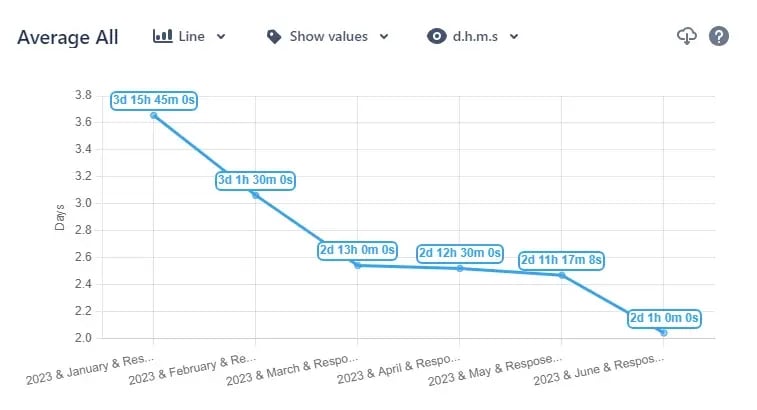
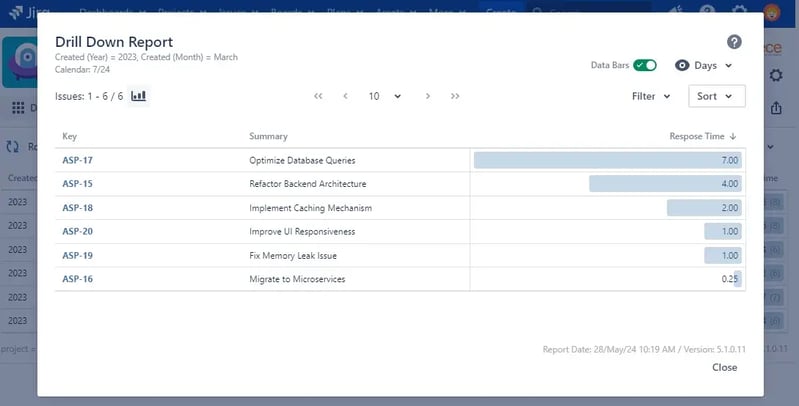
In-depth Analysis: The Drill Down feature allows for a deeper examination of issues and durations within each group, providing detailed insights. See which issues in each group have the best or worst performance.
One of Timepiece‘s standout features is its ability to use existing Jira issue histories. This means you can generate reports on past issues without needing to alter your current workflows. You install the app and enjoy your first reports instantly.
Turn Time-in-Status Data Into Proactive Improvements
Improving your Jira workflows doesn't happen overnight; it requires a continuous commitment to analyzing data and acting on real, measurable insights. Relying on guesswork to pinpoint workflow bottlenecks usually leads to wasted effort and frustrated teams. By implementing a structured process improvement cycle alongside a dedicated Jira reporting tool like Timepiece, you gain total visibility into exactly how long tasks sit in specific statuses.
This level of transparency empowers project managers and Jira administrators to move away from reactive troubleshooting and start making proactive, data-backed decisions. Whether you are tracking average resolution times, monitoring individual workload capacities, or analyzing long-term historical trends, having accurate time-in-status data is the foundation of a highly efficient team. Stop letting hidden delays stall your projects. By leveraging your existing Jira issue history, you can immediately refine your operations, streamline service delivery, and build a more predictable, productive workflow from the ground up.
Try Timepiece for free for 30 days and see the difference it can make. Don’t miss the chance to unlock the full potential of your data and elevate your performance to new heights.

Find Workflow Delays with Timepiece – Time in Status for Jira

Time Between Statuses in Jira: Meaning & How to Track It