
By
Emre Toptanci
on 06/08/2024, 11:09
Last updated on 9/29/26, 1:29 AM

Timepiece – Time in Status for Jira now includes a reporting option called Trim History, available from the date selection panel alongside standard date filtering.
Trim History vs. Regular Date Filtering
You're likely already familiar with filtering a report by created, updated, or resolved dates. Trim History does something different, and more advanced.
Regular date filtering decides which issues appear in your report at all. Trim History doesn't remove issues. Instead, it trims down the history each included issue is judged on, to only the activity that happened between two dates you choose. It's as if the issue was created at the trim start date, carrying whatever data it had at that moment, and stopped existing at the trim end date.
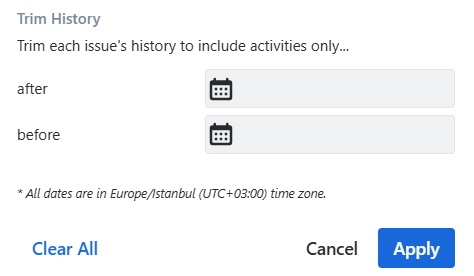
Why This Matters: A Real-World Example
This is useful when an issue has a long lifespan, but for a specific report, you only care about what happened to it during one particular window. Say your issues sat in the backlog for months, then got pulled into the scope of a sprint or a project phase. From that point on, they'll go through plenty of status and assignee changes.
If you run a Time in Status report, you don't want all that backlog time bleeding into your numbers and throwing off the averages. You want to see only what happened once the work actually started.
That's exactly what Trim History is for. Set the trim start date to when the sprint or phase began, and Timepiece will calculate the report as if the issue's history only started there. The long wait in the backlog simply doesn't count.
Trim History Now Supports Dynamic Dates
Trim dates used to be fixed: you'd pick exact calendar dates and update them by hand whenever you wanted to shift the window. That's changed. With the Dynamic Date Picker, Trim History now supports the same dynamic anchor points as regular date filtering; things like "start of this month" or "2 days after the start of the current sprint".
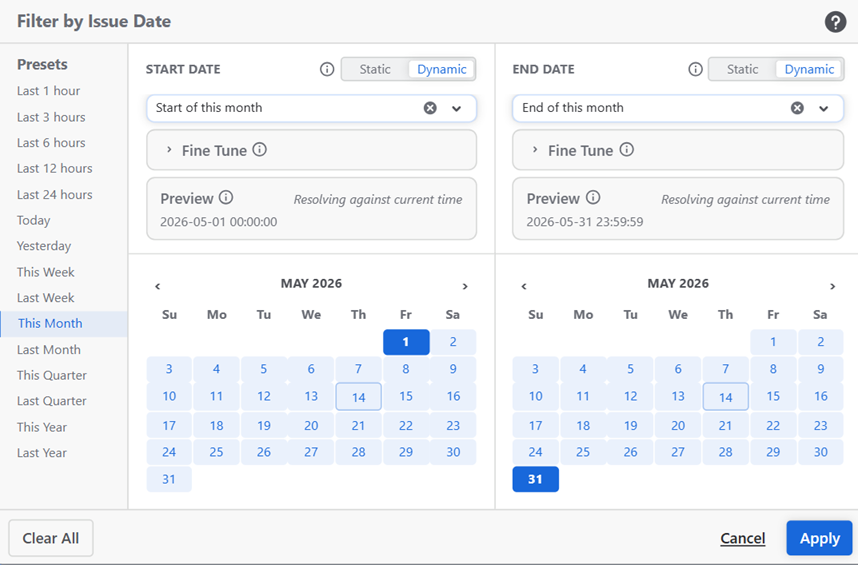
So a trimmed report can stay current without you touching the date fields every time it runs.
Full details on how Trim History works, including static and dynamic trim dates, are in the Date Range documentation.
Want to try it? Start a 30-day free trial. Timepiece is free on Cloud for teams up to 10 users.

Automate Jira Date Filters: Meet the Dynamic Date Picker for Timepiece

Jira Average Time in Status: Choosing Your Denominator